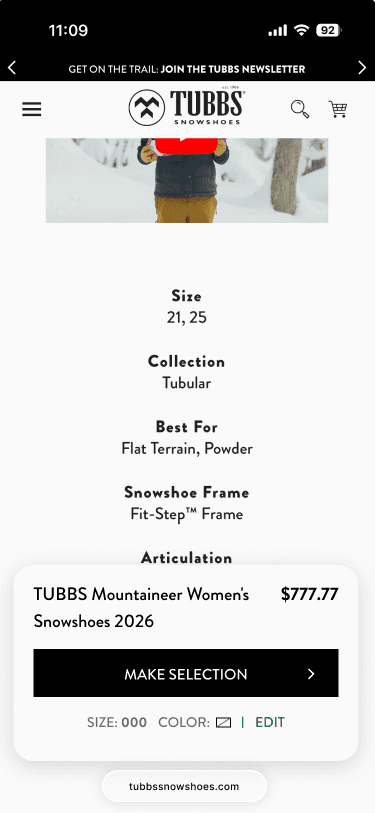
Across 12 brands, over half of high-intent PDP users dropped before add to cart. I rebuilt the purchase experience to capture intent mid-decision and convert it.

Across 12 brands, over half of high-intent PDP users dropped before add to cart. I rebuilt the purchase experience to capture intent mid-decision and convert it.

77% of users reach the buy area and engage with product options.Around 50% move into product details - but drop off before completing them.Only ~9% make it through the full page.


Users are evaluating, but not converting.

The goal was to capture that moment of high intent and convert it.

ROLE


UI/UX Designer

TIMELINE


3 Weeks

8 Months

PROBLEM

The purchase action disappears after the buy area - even while intent remains high during product evaluation.

GOAL

Keep the purchase action present during evaluation, without adding friction.

PLAN OF ACTION

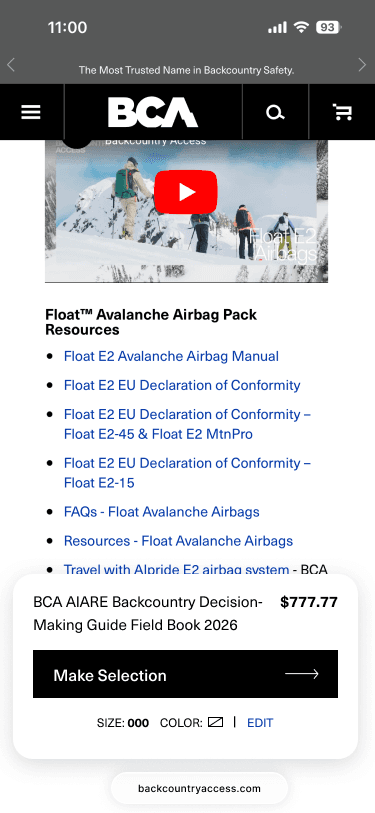
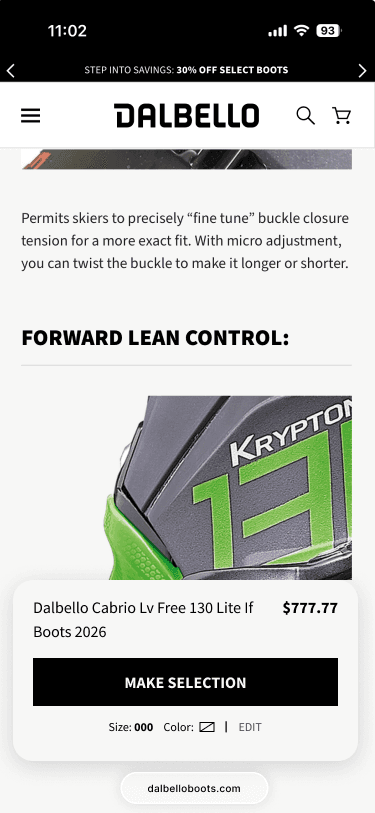
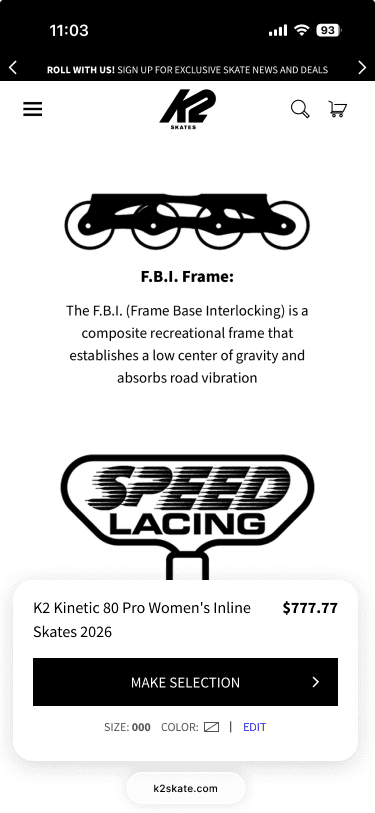
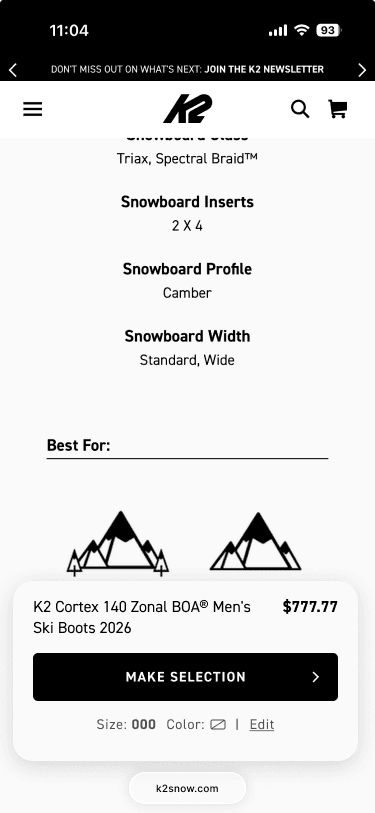
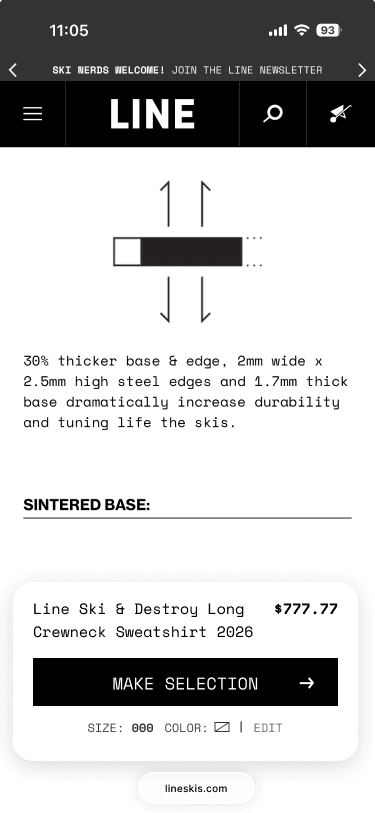
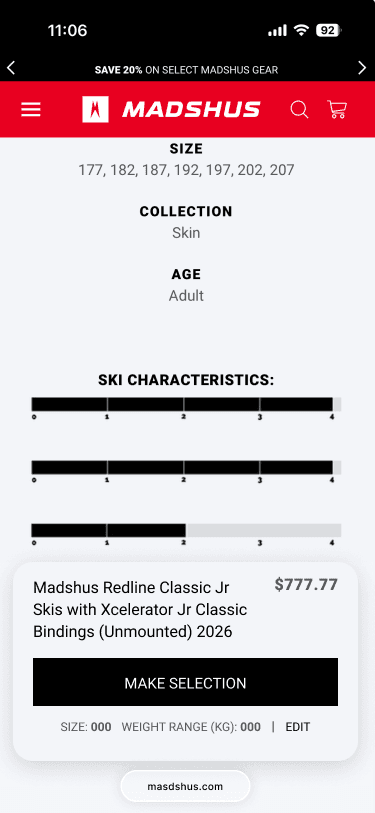
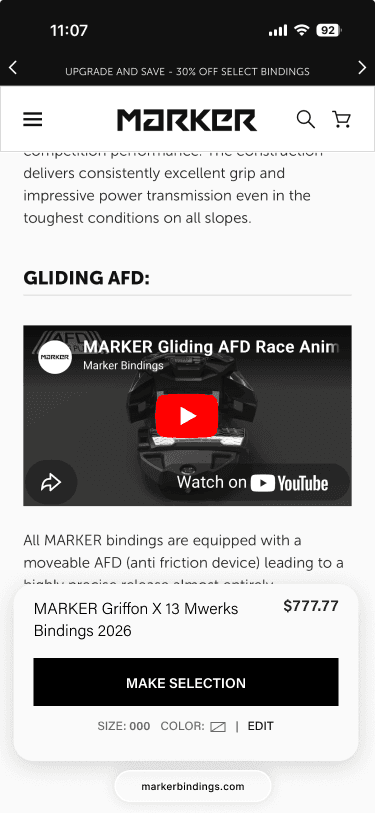
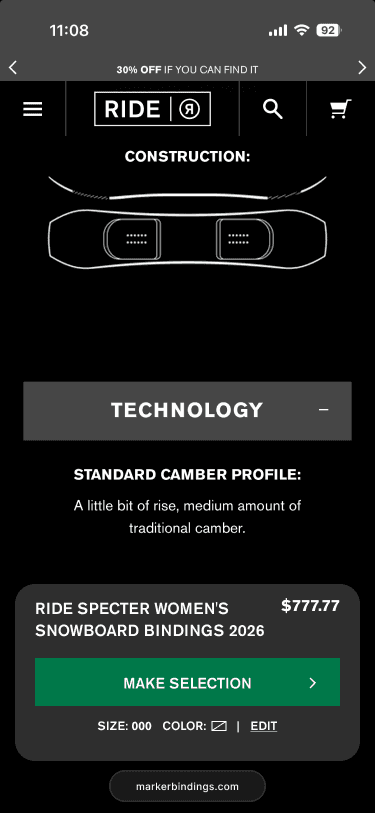
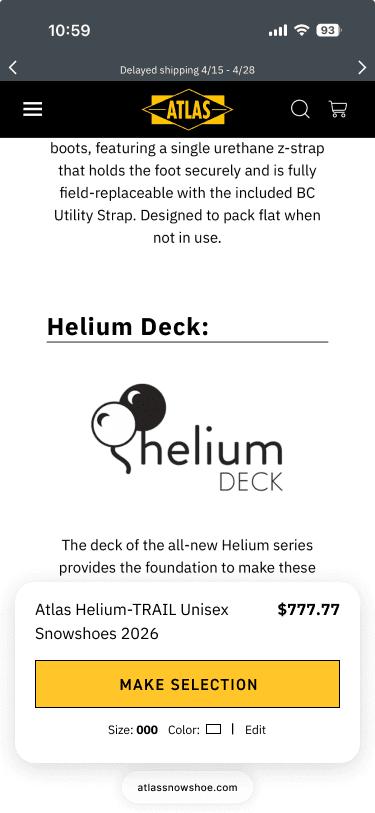
Introduce a persistent, context-aware CTA that stays visible beyond the buy area, adapts to product state, and enables both selection and direct add-to-cart.
Early Directions

What Didn't
Work

V.1

v1 โ€” Tab-style CTA
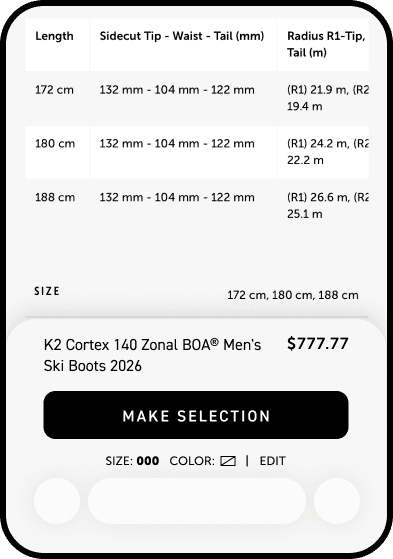
Pushed the persistent CTA into a pop-up tab to keep it visible, but it took up too much space and became disruptive.


It pulled focus away from the product and broke the flow of evaluation.


V.2

v1 โ€” Tab-style CTA
Pushed the persistent CTA into a pop-up tab to keep it visible, but it took up too much space and became disruptive.


It pulled focus away from the product and broke the flow of evaluation.


V.1

v1 โ€” Tab-style CTA
Pushed the persistent CTA into a pop-up tab to keep it visible, but it took up too much space and became disruptive.


It pulled focus away from the product and broke the flow of evaluation.


V.2

v2 โ€” Condensed inline CTA
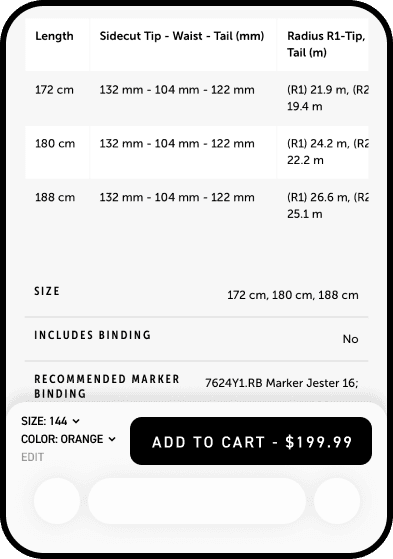
Tightened the pattern into a more compact version within the PDP, but it reduced clarity and made interactions feel cramped.


Dropdowns became harder to use, and the experience started to feel cluttered.

v1 โ€” Tab-style CTA
Pushed the persistent CTA into a pop-up tab to keep it visible, but it took up too much space and became disruptive.
It pulled focus away from the product and broke the flow of evaluation.


v2 โ€” Condensed inline CTA
Tightened the pattern into a more compact version within the PDP, but it reduced clarity and made interactions feel cramped. Dropdowns became harder to use, and the experience started to feel cluttered.

Outcome

Shipped across 12 brands, the system drove a 3.4% increase in add-to-cart and a 42% lift in CTR within the first three weeks.


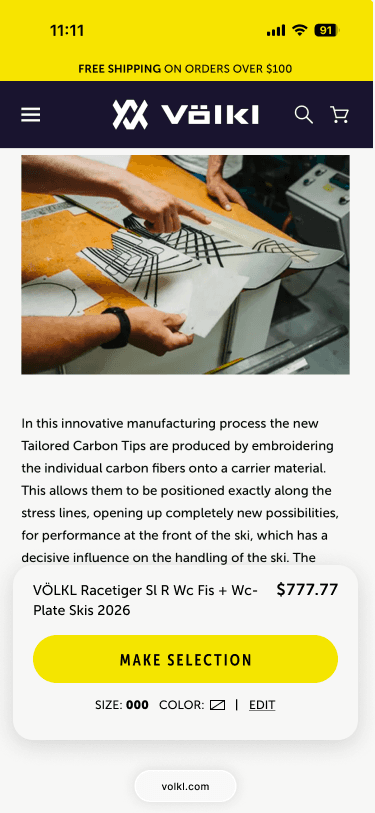
The final solution keeps the CTA present without getting in the way, supporting users as they evaluate the product.


The CTA adapts based on user state, once selections are made, users can purchase from anywhere on the page. If not, it guides them back to the buy area to complete selections.


Built as a step toward a v.2 full purchase layer, enabling users to select and complete purchases from any point on the page.
I design

Lets chat โ†“

Open to new opportunities

ยฉ2026 Bryan Brunot ๐ŸŒด

I design

Lets chat โ†“

Open to new opportunities

ยฉ2026 Bryan Brunot ๐ŸŒด

I design

Lets chat โ†“

Open to new opportunities

ยฉ2026 Bryan Brunot ๐ŸŒด

Create a free website with Framer, the website builder loved by startups, designers and agencies.